Why Vibe Coding Platforms Are Designed to Waste Your Money
Lovable, Bolt, and Replit Agent are AI wrappers that profit when their AI fails. Why credit-based pricing burns your budget and what to build instead.

Most vibe coding platforms don't want you to succeed on the first try. That's the business model.
Think about how these platforms actually work. You talk to an AI chat agent. You describe what you want built. The AI writes code. Every token the AI generates costs the platform money, but it costs you more. The more back and forth, the more credits you burn. The more credits you burn, the more money they make.
So what happens when the AI gets it right the first time? The platform makes less money.
The AI Wrapper Problem No One Talks About
A lot of these vibe coding tools are just AI wrappers around the same large language models you can already access directly. Platforms like Lovable, Bolt, Replit Agent, and other AI coding platforms are all sitting on top of models like Claude or GPT. They add their own system prompts, strip context, inject instructions, and build a UI layer around it. That's the entire product.
I've used Claude Code directly through Anthropic and noticed something interesting. The model felt noticeably smarter when I used it without a middleman platform. Same AI model, different results. That's not a coincidence.
These vibe coding platforms aren't necessarily sabotaging anything on purpose. But when you add layers of abstraction on top of an AI model, output quality degrades. Extra system prompts eat into context windows. Platform specific instructions compete with your actual request. Overhead adds up. The model has less room to think about your problem because it's busy following the platform's rules.
The credit based pricing model makes this even worse. Users have reported burning through hundreds of credits in under an hour on platforms like Lovable and Bolt, often stuck in loops where the AI breaks something, then tries to fix it, then breaks something else. Every iteration costs you money. Every mistake is revenue for the platform.
The 80/20 Wall That Kills Vibe Coding Projects
Even when vibe coding platforms work, they tend to hit a wall around 80% completion. The first 80% of your software project looks impressive. You get a working prototype fast. Screens render. Buttons click. It feels like magic.
Then you need authentication that actually works. Or payment processing that handles edge cases. Or a database schema that won't collapse under real traffic. That last 20% requires exactly the custom software development skills these AI coding platforms promised you wouldn't need.
This is where projects die. This is also where the credit burn accelerates, because now you're asking the AI to do genuinely hard things while fighting against its own platform's constraints. We see this happen all the time.
Talk to an engineer
Building something like this?
Skip the sales call. Tell a senior engineer what you want to build and get a straight answer on scope and cost.
Why Building Custom Software Directly Is the Move
I build custom software for startups and businesses at PaloozaLabs, and I don't use any vibe coding platforms. I work directly with the AI models themselves. No AI wrapper, no platform tax, no middleman between me and the model.
The difference is significant. When you work directly with Claude Code or any other AI coding tool through its native interface, you get the full context window. You control the system prompts. You decide what context the model sees. There's no vibe coding platform overhead competing with your actual instructions.
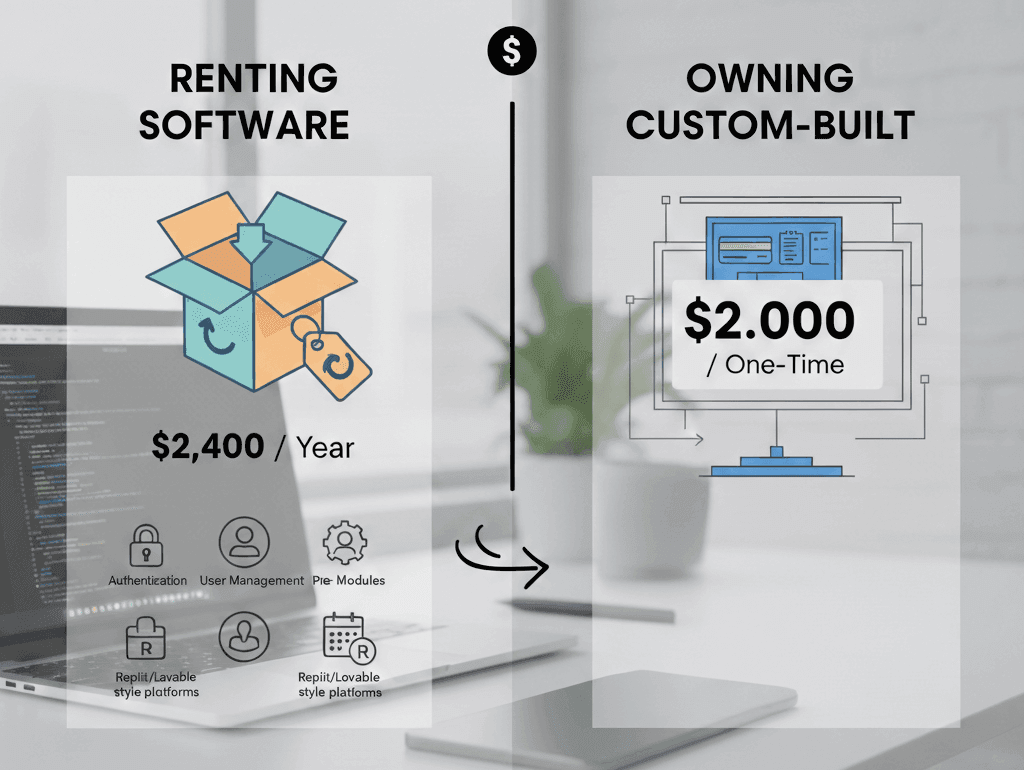
You also own everything. No vendor lock-in. No proprietary deployment pipelines. No surprise pricing changes that blow up your software development workflow overnight.
This matters more than most founders realize. When you build on someone else's vibe coding platform, you're renting their abstraction layer. When that platform changes its pricing, updates its prompts, or pivots its product, your entire workflow breaks. I've seen startup founders get burned by this repeatedly.
The Real Cost of Vibe Coding Platform Convenience
The pitch from vibe coding platforms is always the same. "Build apps without coding." "Ship in minutes." "No technical skills required." It sounds great until you realize the tradeoff.
You're paying more per token than you would going direct. You're getting worse AI output because of prompt overhead. You're locked into a platform that profits from your failures. Once your project hits real complexity, you're stuck with code you don't understand, can't maintain, and can't easily move off the platform.
The developers who are actually shipping production software with AI aren't using these AI wrapper platforms. They're using the models directly, understanding their output, and building on top of solid software architecture.
If you're a founder or business owner thinking about building software, skip the vibe coding wrappers. Either learn to work with AI models directly or hire a custom software development team that already does. The vibe coding platform might feel faster on day one, but it will cost you more in the long run, in credits, in technical debt, and in time spent fighting a system that isn't designed to help you finish.
PaloozaLabs builds custom software for startups and businesses. No wrappers, no templates, no platform tax. Just real software built on solid architecture. You own all the code. Ready to build? Let's talk.
Read next. The Replit-specific numbers are in Replit vs hiring a developer, and the honest 2026 ceiling is in can you vibe code a full app in 2026.
Frequently Asked Questions
Are vibe coding platforms just AI wrappers?
Most vibe coding platforms like Lovable, Bolt, and Replit Agent are built on top of existing large language models like Claude or GPT. They add a UI layer, their own prompts, and credit-based pricing on top of the same AI models you can already access directly. If you want to understand the full difference between these platforms and building custom software, read our comparison of off-the-shelf vs custom software.
What is the 80/20 problem with vibe coding?
Vibe coding platforms can typically generate about 80% of a project quickly, including UI screens and basic functionality. But the remaining 20%, which includes authentication, payment processing, and production hardening, requires real software engineering skills. This is why many founders end up switching to custom software development after hitting the wall.
Is it better to build custom software instead of using vibe coding platforms?
For production software that needs to scale, custom software development gives you full context control, no vendor lock-in, and higher quality output. Platforms like Lovable look fast on day one but create technical debt that compounds over time. See our full breakdown of Lovable vs custom development for a detailed comparison.
Filed under