Hiring a Developer for Your Startup: What I Learned Building 10+ Platforms
After 10+ custom platforms, here is what every founder should know before hiring a developer: quotes, code ownership, and red flags to avoid.

I moved from Australia to California with no clients, no network, and no real plan. Just a laptop and the ability to build software. A few years and 10+ platforms later, I have worked with founders in fitness, manufacturing, education, renewable energy, ecommerce, and more. Every project was different. Every industry was different. But the problems founders came to me with were almost always the same.

This is what I learned.
Most Founders Don't Have a Tech Problem
Nine out of ten founders who reach out to me think they need an app. What they actually need is someone to sit with them and figure out what the app should do. Not what it could do. What it should do. There is a massive difference.
One of my clients came to me with a list of around 30 features for their platform. We sat down and cut it to about 8 for the first version. That product launched, real users started using it, and we added features from there based on what they actually needed. If we had built all 30 features upfront the project would have taken three times as long, cost three times as much, and half of those features would have never been touched.
The best developer you can hire is the one who tells you what not to build.
Nobody Cares About Your Tech Stack
I build with Angular, .NET Core, and PostgreSQL. You know who cares about that? Other developers. Founders do not care and they should not have to. What founders care about is whether the thing works, whether it does what they need, and whether the person building it actually understands their business.
I built a platform for a Pilates instructor. I have never done Pilates in my life. But I understood what she needed because I listened. She needed a way to plan classes, collect feedback from other instructors, and manage subscriptions. That is not a Pilates problem. That is a business operations problem. I know how to solve those.
If a developer spends more time talking about their tech stack than asking about your business, that is a red flag.
Talk to an engineer
Building something like this?
Skip the sales call. Tell a senior engineer what you want to build and get a straight answer on scope and cost.
The First Version Should Be Embarrassingly Small
Every founder wants to launch with a complete product. I get it. You have this vision and you want the world to see it the way you see it. But the founders who actually succeed are the ones who launch with something small and ugly and then improve it based on what real users tell them.
I built a coaching platform that started as a simple practice plan editor. That is it. No video analysis, no player stats, no advanced analytics. Just a way for coaches to organize their sessions. From there we added features based on what coaches actually asked for. Not what we assumed they wanted.
If your first version takes more than 2 to 3 months to build you are building too much.
A Good Developer Will Stop You From Building 30 Features at Once
I have lost potential clients because I told them their idea needed to be smaller first. I am fine with that. The ones who stuck around are the ones who built something that actually worked.
A client came to me wanting to build a service platform with an AI-powered phone system. His original plan had the AI greeting callers with a scripted first message. I told him to cut it. No greeting, no script, just let the caller talk and have the AI respond naturally. It felt risky to him but it ended up being the right call. The interactions felt more human and the system scaled better because there was no rigid script to maintain.
If your developer says yes to every feature you throw at them without questioning the priority, they are not looking out for your product. They are looking out for a bigger invoice.
You Need to Own Your Code
This is non-negotiable. I have talked to founders who paid agencies $30,000 or more for a product and do not own a single line of code. The agency hosts it, maintains it, and charges monthly to keep it running. If they want to leave they have to start from scratch.
Every client I work with owns 100% of their code. No licensing fees, no monthly hostage payments, no vendor lock-in. If they want to take the codebase tomorrow and hand it to another developer they can. That is how it should work.
Before you sign anything with any developer or agency, ask one question. Do I own the code? If the answer is anything other than yes, walk away. For a deeper look at this tradeoff, read our breakdown of custom software vs off-the-shelf software.
Content Is How Clients Find You
I have never spent a dollar on ads. Every single client I have ever worked with found me through something I wrote. A blog post, a Reddit comment, a Threads post. One of my first clients literally sent me his phone number in a Reddit DM because he read a comment I left on someone else's post and it resonated with him.
I have written over 100 blog posts while running this business. Some weeks nothing happens. No traffic, no leads, no engagement. But then someone reaches out and says they found me through an article I wrote six months ago. That is the compounding effect of organic content. It is slow and boring and it works.
If you are a founder looking for a developer, pay attention to the ones who write. The ones who put their thinking out in public. That is how you know they actually know what they are talking about and are not just recycling a sales pitch.
The Pattern Across Every Project
Pilates instructors, coaches, manufacturers, fitness entrepreneurs, legal educators, renewable energy companies. Completely different industries. Completely different products. But the pattern was always the same.
A founder had a problem that off-the-shelf software could not solve. They needed something built specifically for how their business works. They did not need 50 features. They needed 3 to 5 that actually solved the core problem. They needed someone who would listen, hold them back from overbuilding, and ship something they fully owned.
That is what founders actually need from a developer. Not a tech stack. Not a fancy proposal. Not a yes-man. Someone who understands that building software is really just solving business problems with code and who will hold you back from building everything at once.
PaloozaLabs builds custom software for startups and businesses. No wrappers, no templates, no platform tax. Just real software built on solid architecture. You own all the code. Ready to build? Let's talk.
Read next. If you are non-technical and weighing all the options, how to build an app as a non-technical founder compares them with real prices, and Replit vs hiring a developer does the math on the most common alternative.
Frequently Asked Questions
How do I find a trustworthy developer for my startup?
Look for developers who write publicly about their work, ask questions about your business before talking about technology, and are willing to tell you when your idea needs changes. Check if previous clients own their code and whether the developer offers milestone-based payments instead of requiring everything upfront.
Should I use a no-code platform or hire a developer?
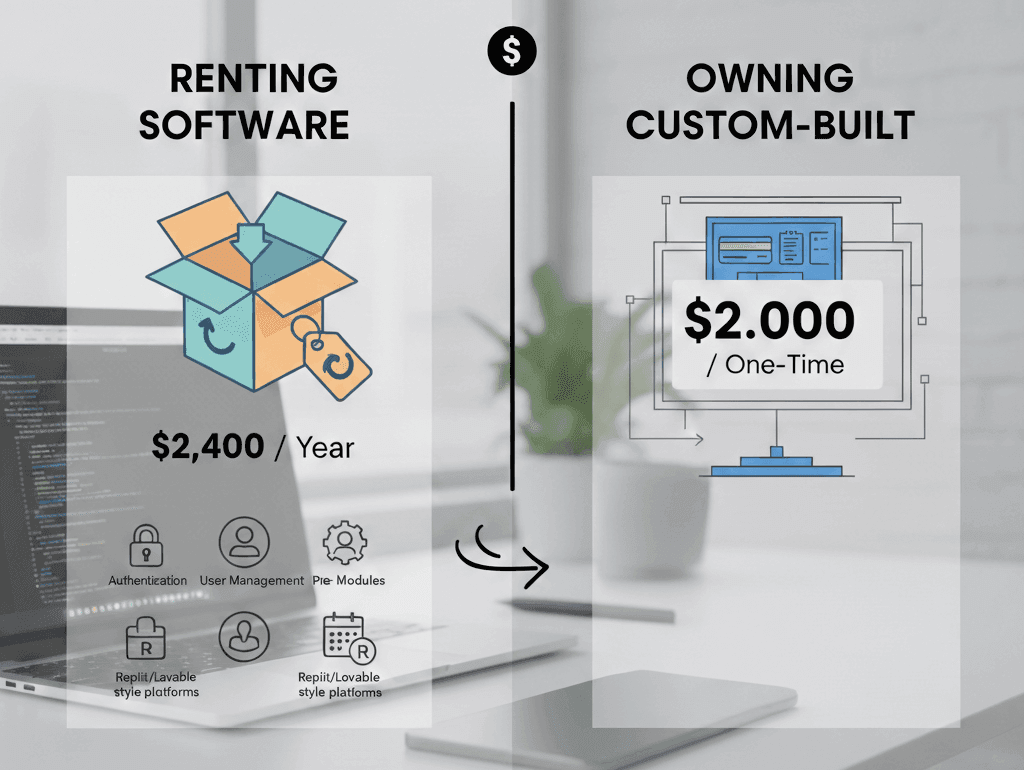
No-code platforms work for simple websites and landing pages. But if your business has a specific workflow, needs integrations with other systems, or you plan to scale beyond a few hundred users, custom software gives you more control, better performance, and full ownership. No-code tools also charge monthly fees that add up quickly over time. We also broke down the math in $2,400 a year on Lovable vs hiring a developer.
Do I need a technical cofounder to build my app?
No. What you need is a technical partner who understands your business and can build alongside you. A cofounder implies equity and long-term commitment before you even know what you are building. Many successful products were built by non-technical founders who found the right developer to collaborate with on a project basis first.
Filed under